R&D
The rise of physical AI: moving from rigid automation to autonomous data collection
-min.jpg)
%20(1).jpg)
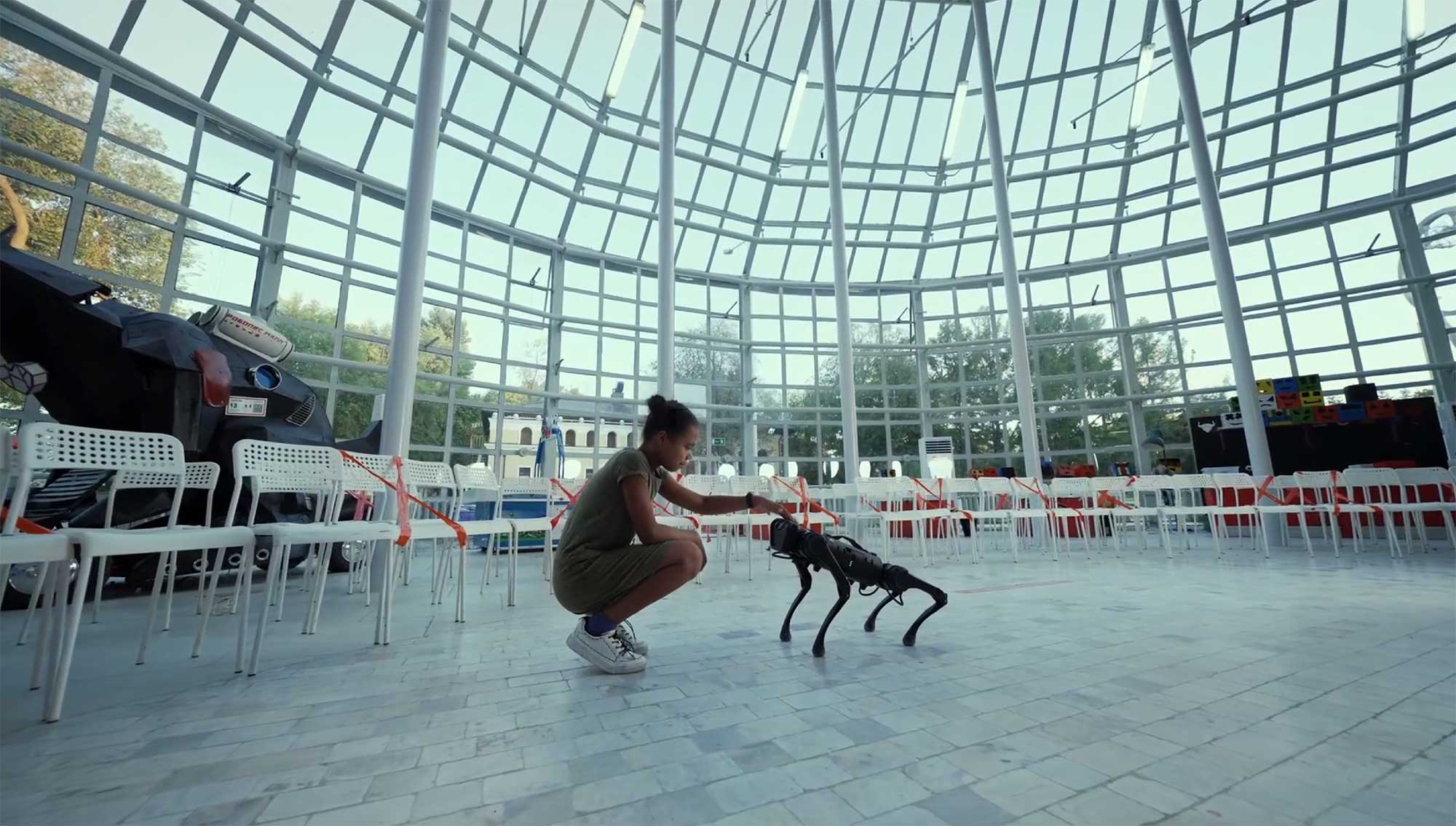
We recently explored a high-impact application of Physical AI, a phenomenon that merges AI with the physical world through robotics, focusing specifically on its potential to revolutionize automated processes within industrial and manufacturing environments. This initiative centered on developing a Mobile Inspection Agent capable of sophisticated data collection and precise defect detection.
The core challenge we addressed was the limitation of traditional inspection methods, which are often time-consuming, prone to human error, and struggle with the speed and volume required by modern production lines. By leveraging Physical AI, the intersection of software-defined intelligence and the physical world, we sought to engineer a solution that interacts directly with dynamic environments, enabling real-time decision-making and significantly enhancing quality control.
How Physical AI Transforms Data Collection
According to NVIDIA, Physical AI lets autonomous systems like cameras, robots, and self-driving cars perceive, understand, reason, and perform complex actions in the physical world.
Until this movement, cameras and other data collection tools were "dumb." They were simply fixed into place and set to capture data continuously or based on a simple trigger. A human (or more recently, a computer vision model) would then review that data to make a decision. Physical AI allows us to make this loop smarter and more adaptable, moving from simple data capture to value-added impact.
How Mobility Solves the Limits of Traditional Robotic Inspection
Robotic arms were the first major step forward. Suddenly, inspection wasn’t limited to a single viewpoint. You could move the camera, capture new angles, and improve coverage.
But industrial arms are typically built around strict, pre-defined paths. They execute the same routines again and again. That helps with repeatability, but it comes with trade-offs:
- You are still constrained by the arm’s physical reach
- Every new part, surface, or scenario increases the programming burden
- Complexity grows quickly, and maintenance becomes its own problem
The next limitation breaker is mobile robotics. Mounting a robotic arm on a mobile base changes the scale of the problem. You’re no longer optimizing inspection at a single station. You can move the “eye” (the camera) into position with the arm, and move the entire platform across the facility. That unlocks large-scale inspection scenarios that were previously impractical: longer surfaces, multiple zones, and more dynamic environments.
The Advantages of Reasoning and Action-taking
Current systems often raise questions about how much pre-programming is required to stay reliable. A traditional system's ability to handle "edge cases" is limited by the finite nature of its code. If you change the model of the object being inspected, or if the environment changes, the system usually breaks.
This is where Physical AI changes the math. By giving our Mobile Inspection Agent a "brain" to interact with a dynamic environment, we can skip the tedious programming of rigid routines. Instead of coding every move, we provide the Agent with a goal and context. It can then use that information to collect data dynamically and consistently, even when the environment or the objects vary between inspections.
Concept becomes reality with safety and simulation
With increased autonomy comes the need for robust guardrails. While the Physical AI handles the what (the goal), we develop the how using hard-coded safety protocols that ensure safe operation alongside humans.
Because we cannot simply drop an untethered autonomous system onto a live production floor, we utilize physically accurate simulations to train our agents. By creating a digital twin of the facility, we can iron out complex edge cases in a risk-free environment. This "Sim-to-Real" approach allows us to validate the agent's reasoning before it ever touches the actual shop floor.
Collaborating on the Future of Autonomy
We don’t believe in one-size-fits-all robotics. We specialize in engineering custom solutions that bridge the gap between complex software intelligence and the physical realities of your business. Whether you're looking to solve a specific defect detection challenge or want to explore the potential of Physical AI in your facility, we’re ready to collaborate. Let’s talk about what’s possible.

Further Reading


%20(1).jpg)