


ASDR
The context
ASDR delivers specialized industrial solutions across sectors like mining, forestry, industrial, and municipal.
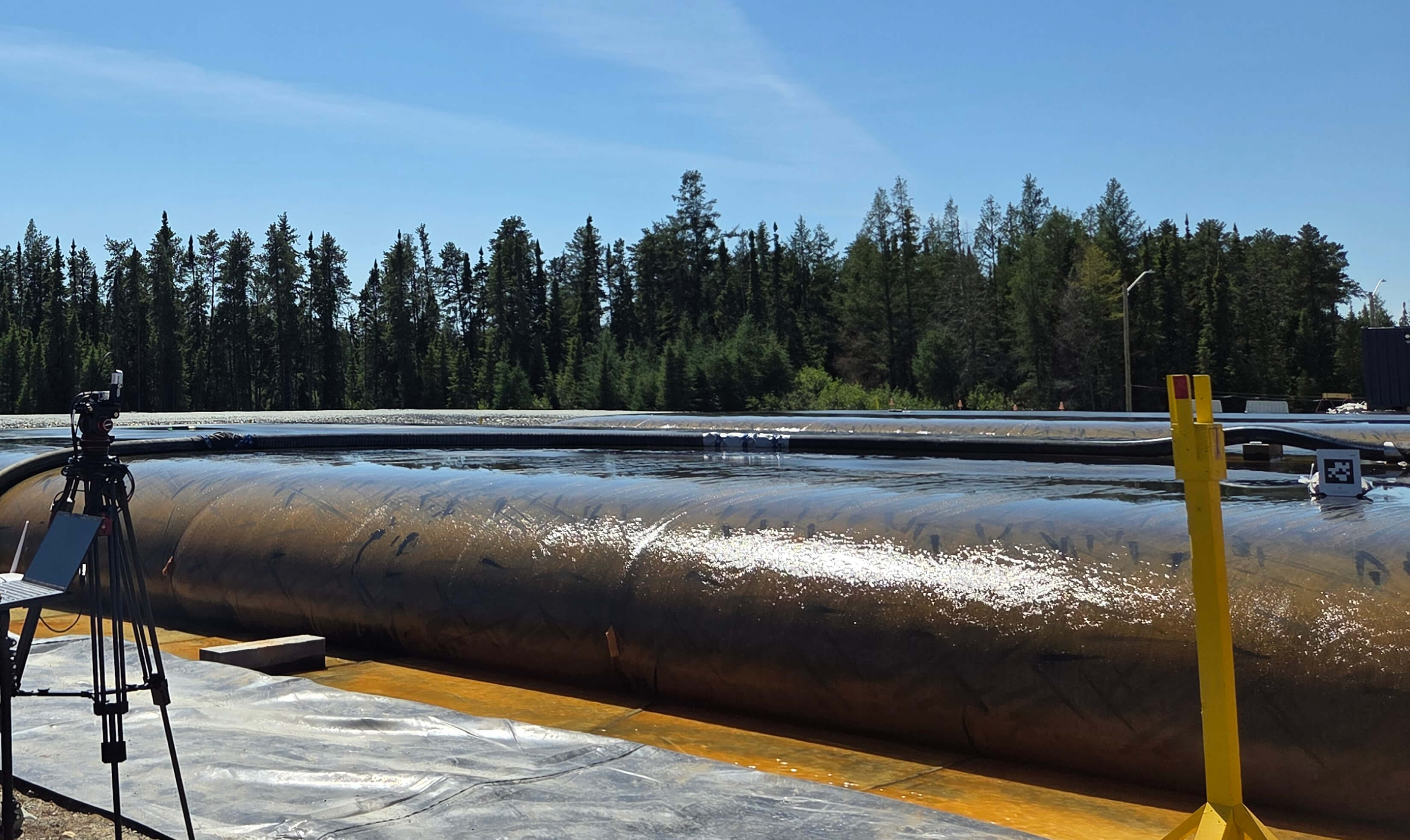
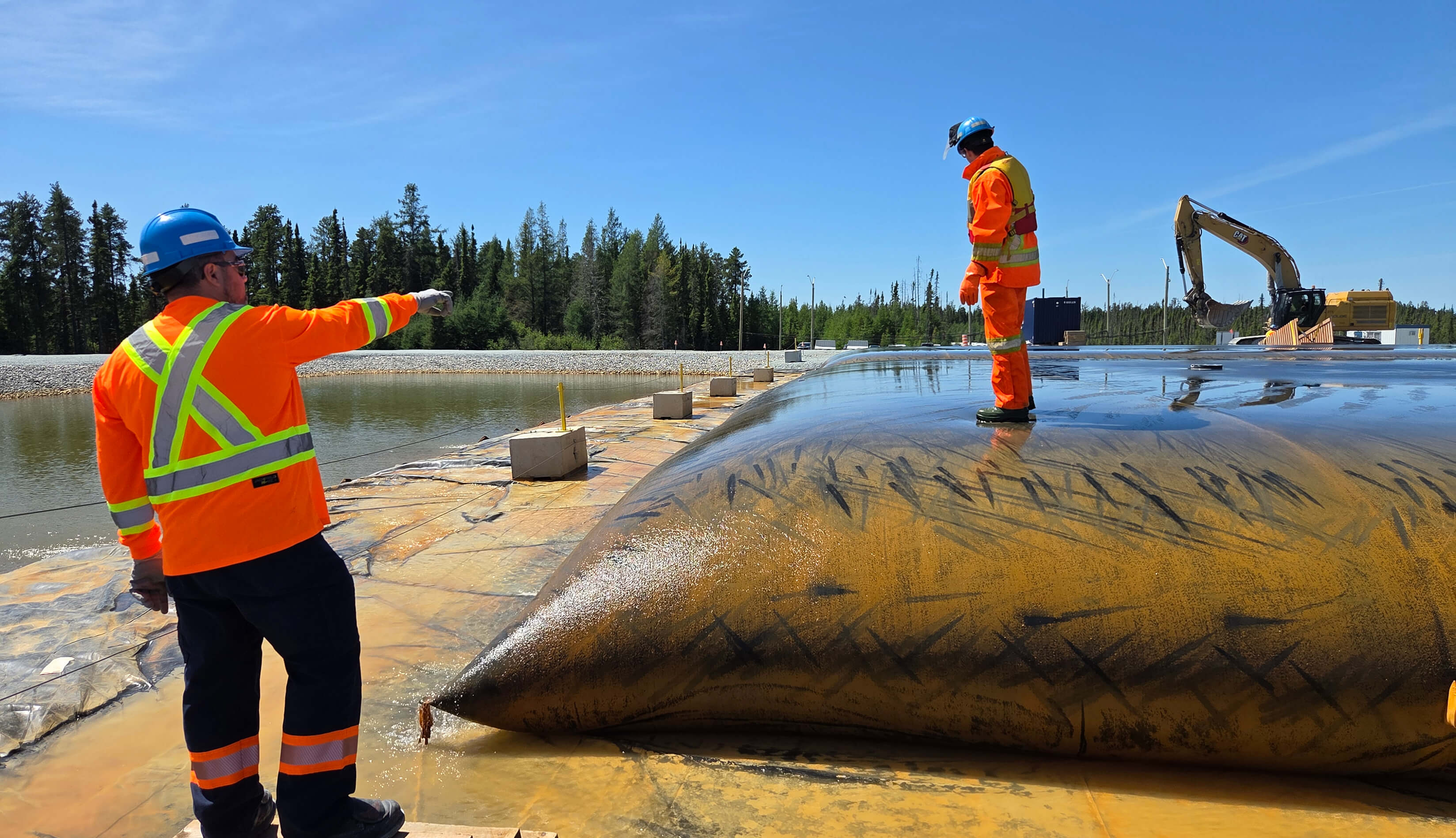
In mining operations, water treatment is mission-critical. These processes rely on Geotube®, massive outdoor filtration bags that separate sludge from water and gradually fill over time while exposed to harsh environmental conditions.
To keep pumping operations optimized, operators need accurate, real-time visibility into Geotube® fill levels. Maintaining the right fill level helps improve process efficiency and supports consistent treatment performance.
While existing monitoring methods provided useful information, ASDR identified an opportunity to enhance operational visibility through continuous, real-time monitoring.
ASDR partnered with us to explore a more reliable way to monitor Geotube®fill levels in real time while freeing up time for operators on site. Here's how we helped bring greater visibility, automation, and operational efficiency to a critical part of their water treatment process.
Project details
The challenge
Our goal was to connect a reliable, field-ready measurement system to ASDR’s existing operations at one of their clients’ mine sites. We set out to automatically capture Geotube®fill levels and feed that data directly into their programmable logic controllers (PLCs). This meant bringing hardware and software together into one cohesive system. Radar sensors in the field needed to capture accurate data, while custom signal-processing logic had to transform that raw input into precise, usable measurements that operators could trust.
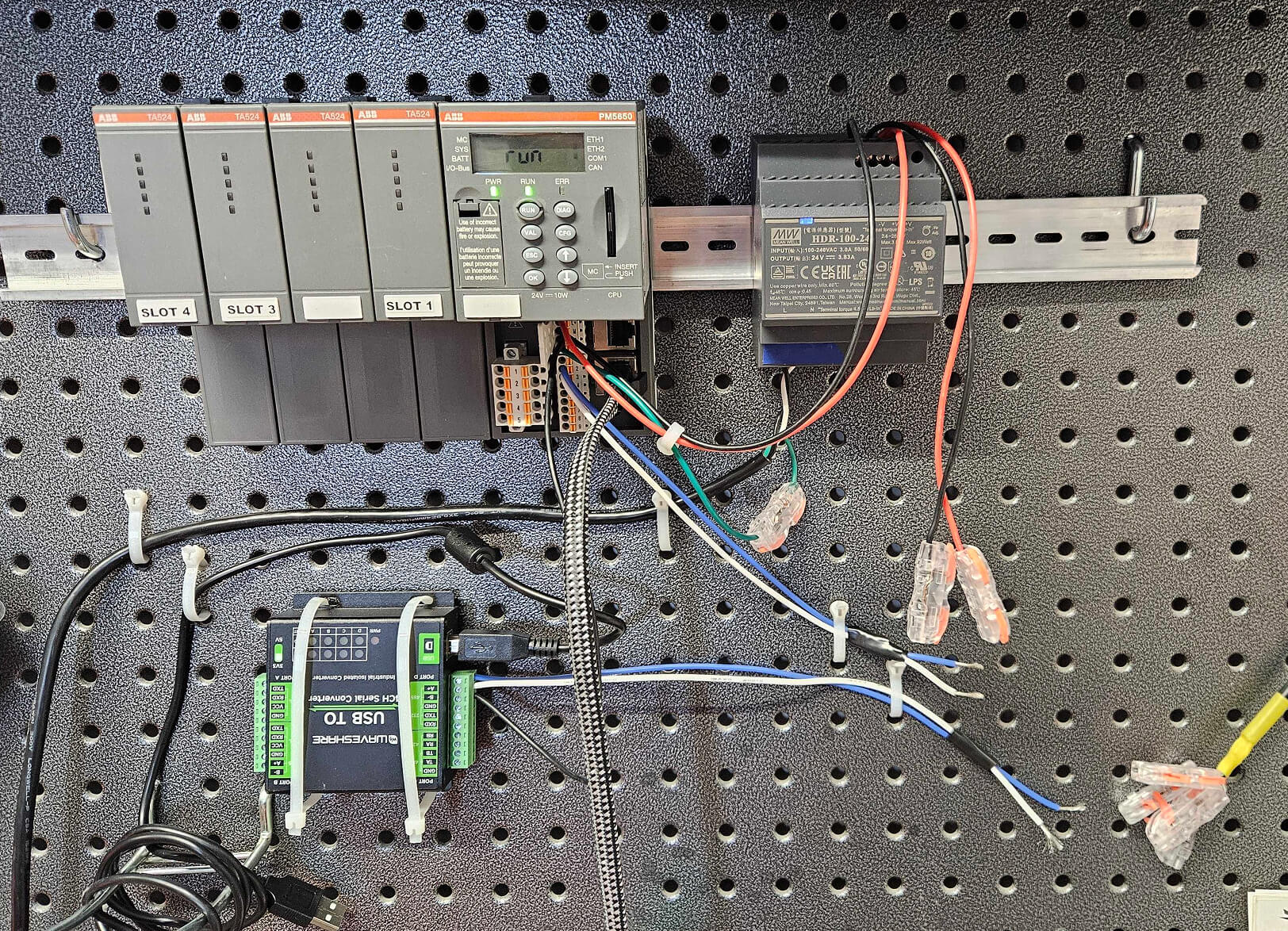
PLCs act as the control hub of industrial operations, connecting sensors, processing data, and triggering actions like adjusting pumping systems or generating alarms. Our pilot solution had to integrate into the mine’s existing ecosystem, feeding clean data into a simple interface for real-time visualization. Ultimately, it would be embedded into the broader human-machine interface (HMI) environment already in place.
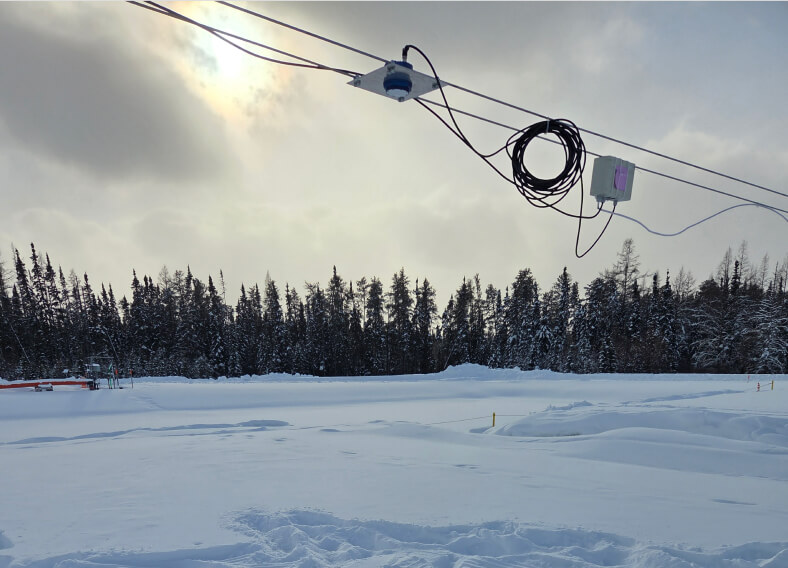
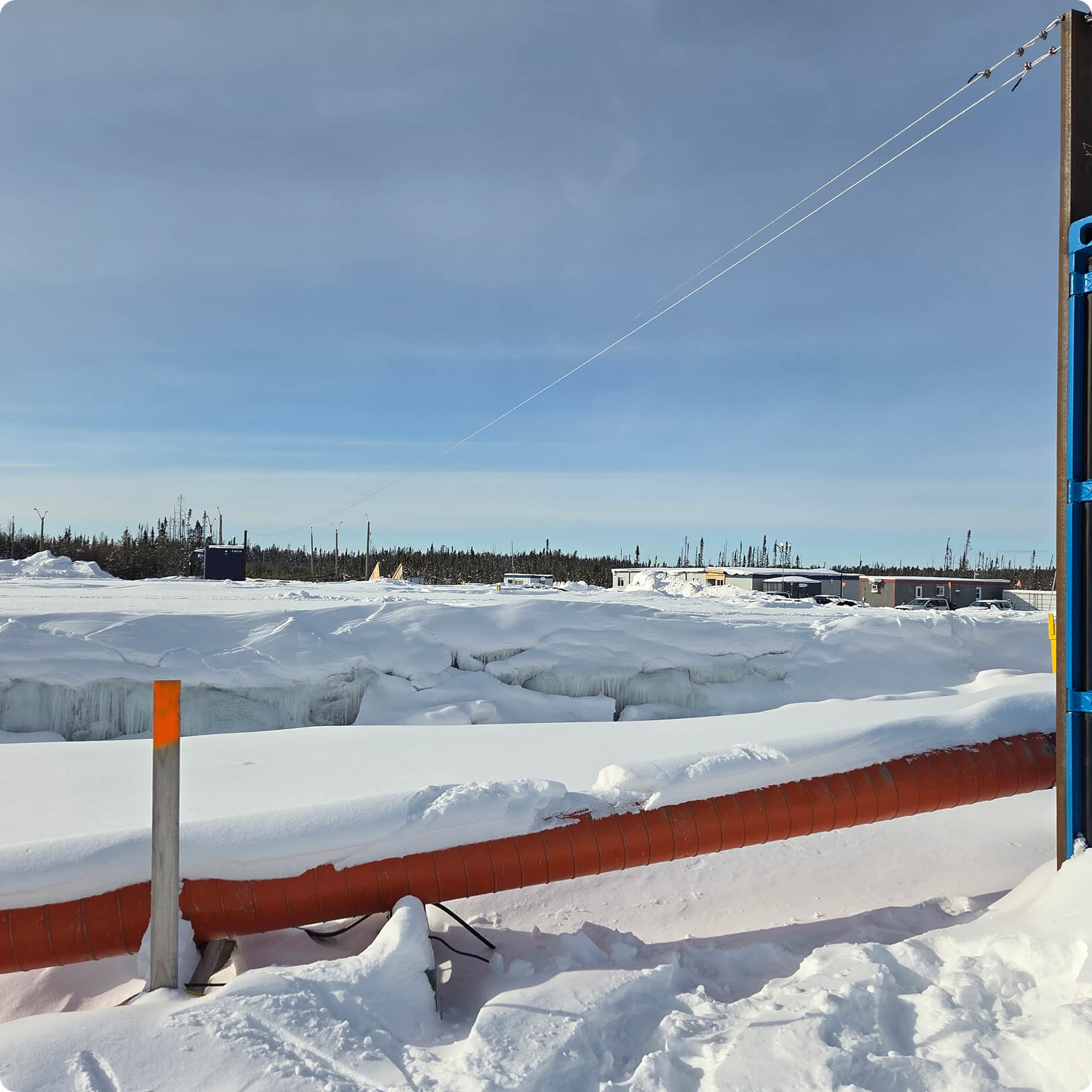
Monitoring Geotube®fill levels in Quebec’s harsh winter conditions meant that standard technologies simply didn’t hold up. The project required reliable measurement in highly variable winter conditions, including snow accumulation and freezing temperatures.We needed a technology capable of maintaining measurement performance year-round and operating reliably in remote environments, every day of the year.
The task at hand
Our approach started with a deep Discovery Phase focused on understanding the operational reality and the technical constraints. We worked closely with ASDR through a series of calls, explored multiple potential solutions, and engaged with hardware suppliers to assess feasibility.
An initial site visit to an ASDR client mine site allowed us to test early hypotheses using camera-based vision technologies and tilt sensors while refining our understanding of the environment. These insights were consolidated into a solution proposal outlining the most viable paths forward.
Through its support under the Vortex Program, the MISA Group contributed to aligning mining operational requirements with the technological expertise of ASDR and Osedea. This collaborative approach helped define the conditions for successful adoption of a digital Geotube®inspection solution, leveraging automation and data-driven monitoring to improve operational efficiency, accelerate decision-making, and support the evolution toward increasingly autonomous mining operations.
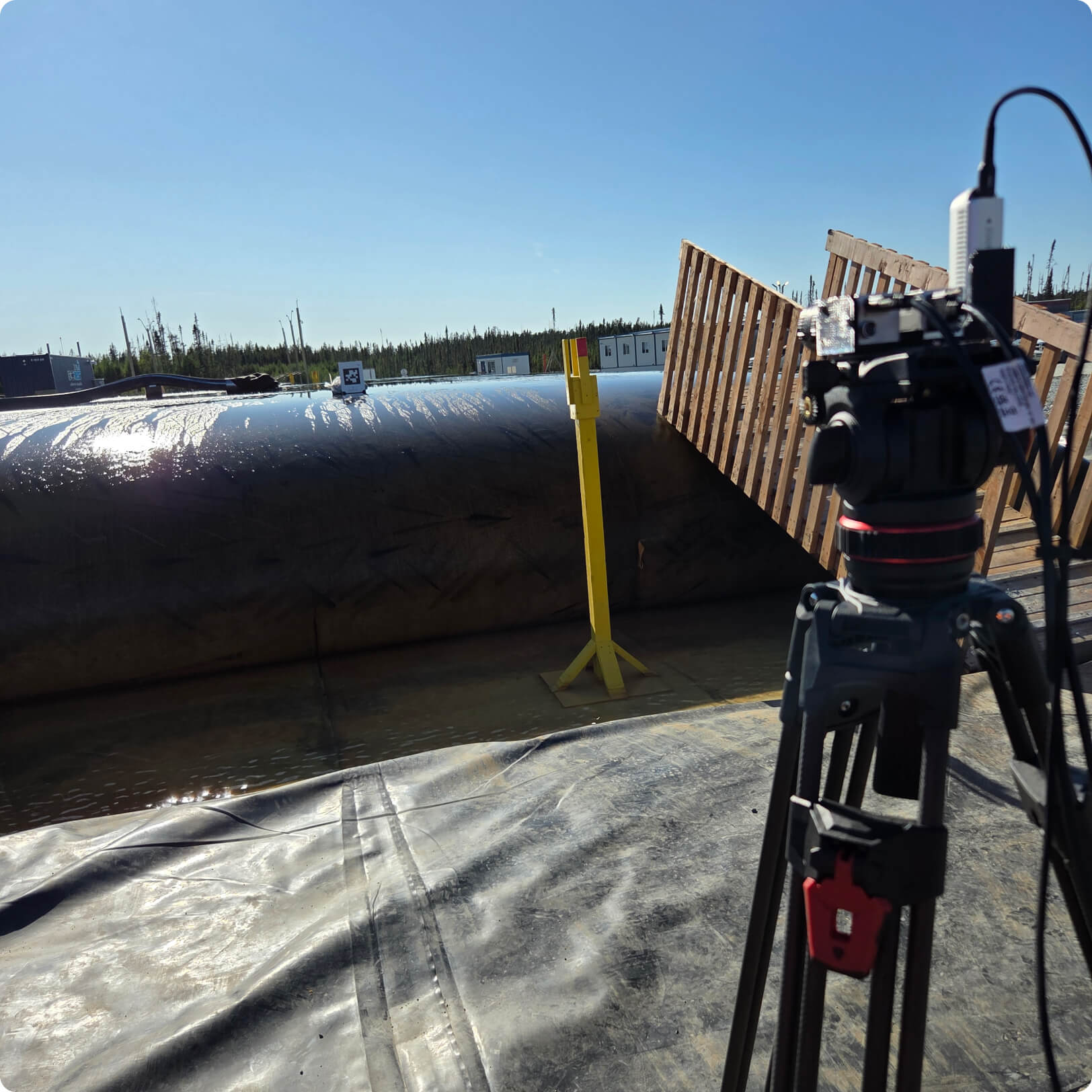
Building on this foundation, we moved into R&D. In alignment with ASDR, we selected Geolux LX-80S radar sensors, a technology capable of emitting electromagnetic waves that can penetrate snow. The concept was to place a reflective plate on the Geotube® that would return a signal to the sensor, even when buried. Additional development work was required to integrate the radar technology into an industrial automation environment and ensure seamless communication with the site's control systems.
To overcome this, we bypassed the proprietary software and retrieved raw data directly through the industrial network. This decision meant rebuilding the signal-processing layer from the ground up. We developed a custom filtering logic designed to distinguish between snow and ice, the reflective plate, and the ground. To validate this approach, we ran extensive lab testing using freshly collected snow, iterating daily and refining the algorithm over eight weeks until it was ready for real-world conditions.
In January 2025, we deployed the solution at the mine, and began the pilot phase. The hardware performed as expected, with radar waves successfully penetrating the snow. Then, our challenge shifted to the software. Ice buildup inside the Geotube® created interference, generating ghost echoes and multiple reflections that made the signal difficult to interpret. Rather than increasing on-site interventions, we focused on refining the algorithm remotely. By introducing clustering logic and temporal smoothing, we enabled the system to filter out noise and lock onto the stable signal of the reflective plate. This transformed unreliable raw data into precise measurements accurate to the centimeter.
The end result
Today, the solution is live and operational, following eight weeks of R&D and a pilot deployment running from winter 2025 - spring 2026.
At its core, the system captures Geotube® fill levels using radar sensors and processes that data through custom-built signal filtering, transforming noisy inputs into clean, reliable measurements. This gives operators continuous, real-time visibility into Geotube® levels in conditions where traditional methods fail.
The solution complements existing operational practices by providing continuous remote visibility of Geotube® fill levels. They can monitor levels remotely, respond proactively to changes, and maintain tighter control over operations. By reducing uncertainty and enabling more precise monitoring, the system supports more consistent process control, while also cutting down on time-consuming manual checks and interventions.
For ASDR, the value goes beyond the technology itself. They now have a solution tailored to their reality, built through iteration, field testing, and close collaboration. The result is a system that works in real conditions (not just in theory).

What’s next
With a validated system in place, the focus now shifts to integration and scale. We’re working with ASDR to integrate the solution into the mine’s existing PLC environment, enabling automated responses such as alarms and pumping adjustments based on real-time data. At the same time, we’re preparing to deploy the system across additional Geotube® and mine sites, confirming its performance at scale.
Ownership is also a priority. Through hands-on training and collaboration, ASDR’s teams are equipped to deploy and manage the system independently of Osedea. Future rollouts will be led by their team, with our support as needed.
This work reinforces a key principle. Choosing innovative technology isn’t enough. It has to fit the realities of the field and be adopted by the people using it every day. That’s why change management is central to our approach. We take the time to understand how teams operate and build solutions that are clear, usable, and ready to scale.
Ready to eliminate guesswork and automate your operations?
Let’s connect your systems, deploy reliable measurements, and give your teams full control in the field. Contact us today.
Did this project give you some ideas? We’d love to work with you! Get in touch and let’s discover what we can do together.
Discover the latest trends, our case analyses and practical advice to help you successfully transition toward automation.


We’re on a constant quest to broaden our horizons and spread wisdom. It’s all about pushing boundaries and elevating our game.