Design
How AI is reshaping product design: Four shifts teams need to prepare for

As AI accelerates the creation of digital products, the role of design is evolving. From adaptive interfaces to new ways of collaborating with engineering teams, designers are rethinking how products are conceived, built, and experienced.
AI is significantly reducing the time required to turn an idea into a working prototype. Interfaces can be generated, interactions developed, and concepts tested with a fraction of the effort previously required.
But faster execution also means that decisions, good or bad, can be translated into products much more quickly.
For design teams, this raises important questions. How do we create trustworthy experiences when AI can act on behalf of users? How do we maintain product consistency when interfaces are generated dynamically? And how should designers collaborate with engineering teams when the boundaries between design and development are becoming less defined?
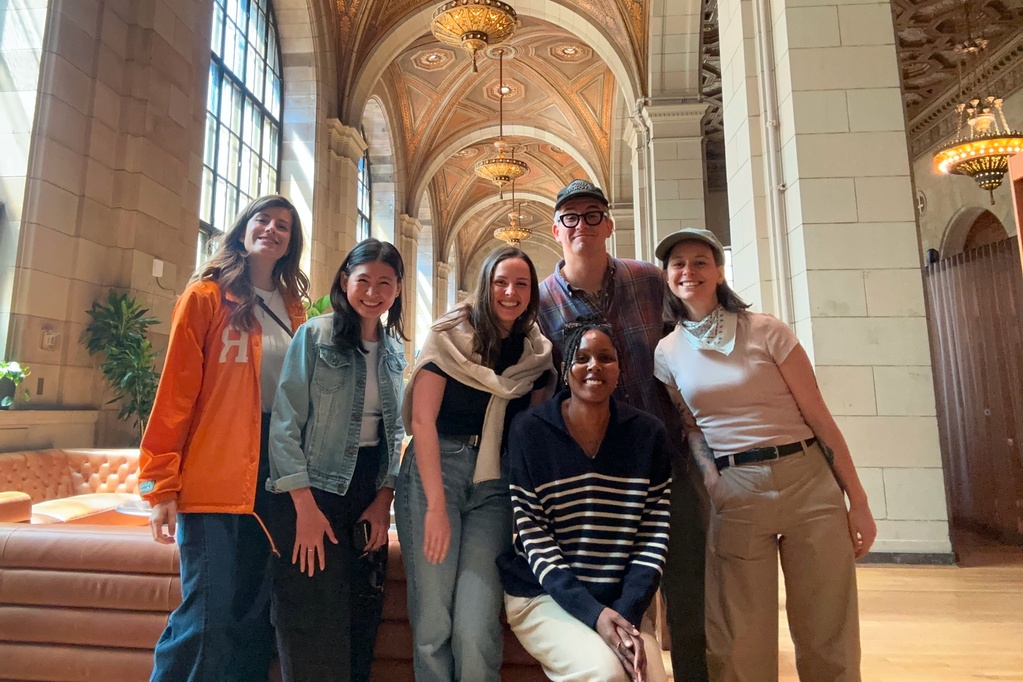
These questions were at the centre of a presentation by me from Osedea's design team at our 2026 Innovation Summit.
Drawing on emerging trends and their reflections on the evolution of our own practices, they explored four shifts that will increasingly shape how digital products are designed and developed.
1. Interfaces are becoming adaptive, but trust must remain central
Most digital interfaces are built around predefined structures and user journeys. While users might have different dashboards or permissions, the experience generally remains consistent.
AI creates the possibility of interfaces that evolve based on context, behaviours, and individual needs.
Consider a CRM used by a sales representative. Rather than navigating between several modules before each client meeting, the representative could access a dashboard that automatically prioritizes account health, recent support tickets, open opportunities, and relevant meeting notes.
The interface adapts to the way the person works.
There are two approaches worth distinguishing:
- Adaptive UI adjusts an existing interface, reorganizing information or simplifying workflows according to user needs.
- Generative UI uses AI to construct interface elements or entire experiences dynamically, based on a user's intent and context.
Both offer opportunities to make complex products more useful and personalized. But they also introduce new responsibilities for design teams. When an interface changes automatically, users need to understand why. They should be able to review recommendations, correct assumptions, and maintain control over important decisions.
For example, if an AI-powered dashboard prioritizes certain information, can users understand the reasoning behind that choice? Can they override the system when its interpretation is incorrect? These considerations need to be incorporated into the experience from the beginning. The design challenge is to make interfaces more intelligent without sacrificing predictability, accessibility, or user control.
Why this matters for organizations
Adaptive interfaces have the potential to reduce the effort required to navigate complex products, particularly enterprise software. But organizations need to consider more than technical feasibility. Clear rules governing system behaviour, explainability, and user control become essential to creating experiences people will adopt and trust.
2. Intentional friction is becoming an important design tool
Removing unnecessary friction has long been a central principle of UX design. Teams simplify navigation, reduce the number of steps in a process, and make interactions more efficient.
With AI taking on increasingly complex tasks, some friction can serve an important purpose. Imagine an AI assistant that helps manage a professional's calendar. If it suggests moving a meeting by 30 minutes, a quick confirmation might be enough. But what if the same assistant prepares a revised commercial proposal and is ready to send it to a client? The consequences are significantly different.
Before approving that action, the user should be able to review what changed, who will receive the proposal, which assumptions were made, and whether any information requires additional validation.
This is an example of intentional friction: introducing deliberate moments of review or confirmation when the risks of an action justify them.
The appropriate amount of friction depends on the consequences:
- Low-stakes actions benefit from seamless interactions.
- Medium-stakes actions may require simple confirmation.
- High-stakes actions call for stronger oversight, explanations, and explicit approval.
This approach becomes especially relevant for AI-powered products capable of acting autonomously.
Designers need to determine which decisions can safely be delegated to a system and which should remain under human control.
Why this matters for organizations
As companies introduce AI agents into customer-facing products and internal workflows, they will need to define appropriate levels of autonomy. Design plays a critical role in translating those decisions into interactions that balance efficiency with accountability. Sometimes, a well-designed pause is precisely what makes an experience trustworthy.
3. Design systems are becoming infrastructure for AI-powered development
Design systems have traditionally helped teams maintain consistency through reusable components, visual guidelines, and interaction patterns. As AI becomes involved in generating interfaces and code, their importance grows considerably. A design system can act as a functional contract between designers, developers, and AI agents. It establishes which components exist, how they behave, how they can be combined, and what should remain consistent across a product.
Consider a company using AI to generate interfaces for different business functions. One team creates a sales dashboard, another an operations dashboard, and a third a customer support interface. Without a sufficiently structured design system, each experience might appear acceptable independently while gradually introducing different interaction patterns, terminology, accessibility behaviours, and confirmation mechanisms. Over time, these inconsistencies can compromise the coherence of the overall product.
A robust design system provides a common foundation. But having documentation and component libraries is only part of the solution. AI tools need access to relevant design tokens, implementation guidelines, reusable components, and examples. Generated outputs also need to be validated against those standards.
For designers, this means contributing to the structure that guides how interfaces are produced, including those created by AI.
Why this matters for organizations
For organizations planning to scale AI-assisted development, design systems become a strategic investment.
They help teams maintain quality and consistency while enabling faster production across different products and workflows.
The more organizations automate interface creation, the more important it becomes to define what should remain consistent and where human judgment is required.
4. The design process is moving toward continuous collaboration
Perhaps one of the most significant changes explored during the presentation is how AI is influencing the relationship between design and development.
Traditionally, product development has often followed a relatively sequential model:
Research → Design → Development → Testing
Although many teams already use iterative practices, work is still frequently organized into distinct phases with handoffs between disciplines.
AI-assisted tools are making a different model increasingly practical.
Teams can now move from research and early concepts to interactive prototypes much faster. Those prototypes can connect to real data, demonstrate dynamic behaviours, and sometimes become the foundation of the product itself.
This changes the role of prototyping.
Rather than serving primarily as a representation of a future experience, a prototype can become a practical environment for exploring how the product actually works.
Designers, developers, and product managers can test assumptions together, identify problems earlier, and adjust solutions continuously.
The process becomes a cycle:
Research → Prototype → Learn → Adjust → Repeat
This also challenges the traditional idea of a design handoff.
Instead of completing a set of mockups and transferring them to developers, designers can remain involved throughout implementation, reviewing behaviours, refining interactions, and evaluating whether the product continues to address user needs.
Design is expanding beyond screens and deliverables
These shifts point to a broader evolution of the design profession.
As AI generates interfaces and makes production more accessible, designers are becoming increasingly involved in strategy, system behaviour, and product decision-making.
The scope of user experience is also expanding beyond traditional screens.
In robotics, autonomous agents, voice systems, and other intelligent technologies, the experience often depends on how a system behaves rather than what a conventional interface displays.
Designers need to consider how users express intent, understand what the system is doing, give consent, recover from errors, and intervene when necessary.
The challenge becomes particularly interesting when much of the work happens behind the scenes.
For example, an AI agent might execute a series of tasks without requiring the user to navigate through an interface. The user experience may instead centre on understanding the agent's proposed actions, reviewing its work, and approving the outcome.
The designer's responsibility extends to these interactions, even when there is no traditional screen to design.
At the same time, as product managers prototype, engineers contribute to interaction design, and AI tools generate interfaces, design thinking can become more widely integrated across teams.
The objective isn't for everyone to perform the same role. It's to bring design expertise into more of the decisions that shape the product.
The next evolution of design starts with better decisions
AI is creating significant opportunities to rethink how digital products are built and experienced. Adaptive interfaces, intelligent agents, faster prototyping, and more connected workflows are already challenging established practices.
But the ability to produce more, faster, also increases the importance of making the right decisions.
A poorly defined problem can become a working prototype in hours. An inconsistent interaction can be reproduced across multiple interfaces. An automated decision can affect a user before anyone has reviewed its consequences.
For organizations, the challenge is to combine the speed and capabilities of AI with the research, judgment, and collaboration required to build valuable products.
At Osedea, this is why we continue to explore how design, engineering, AI, and product strategy can work more closely together. Our goal is to evolve our practices as technology advances while maintaining a clear focus on user needs and meaningful business outcomes.
As the tools evolve, design expertise becomes even more important in determining what we build, how it behaves, and whether it deserves users' trust.


Did this article start to give you some ideas? We’d love to work with you! Get in touch and let’s discover what we can do together.
Further Reading


.jpg)




-min%20(1).jpg)