Design
Building our own design summit: lessons from DAI26
Once a year, our design team locks the laptops, leaves our projects, and spends two days doing something we don't usually get paid to do: just talk. About design. We call it Design: As Is. This year, for our third edition, something clicked.
Rethinking the format year after year
The first year, we all crammed into a room and watched talks from Config, Figma's annual conference, together. Informative? Sure. Passive? Extremely. We watched, we talked about what we watched, and went back to our desks with a lot of notes and not much else.
Year two, we tried to change that by adding hands-on workshops, testing new Figma features together. Better. More active. Still, somehow, we'd built our one shared day around another company's product roadmap.
This year, we asked a different question: What if the day wasn't about any tool at all? What if we just focused on design?
Shifting the focus back to the craft
The day became about judgment, taste, and the thinking that makes a designer good, independent of any single tool, client, or deliverable. Tool and feature talk moved into its own ongoing monthly session.
We built the two days around that idea. Day one ran in loops: an outside talk, an open discussion, then pairing up to sketch through real work in response to whatever idea had just landed.By day two, we didn't need the scaffolding anymore. We put the screens away and loosened the agenda so the point was simply to talk to each other as designers, instead of present to one antoher.
Making space for the conversations that matter
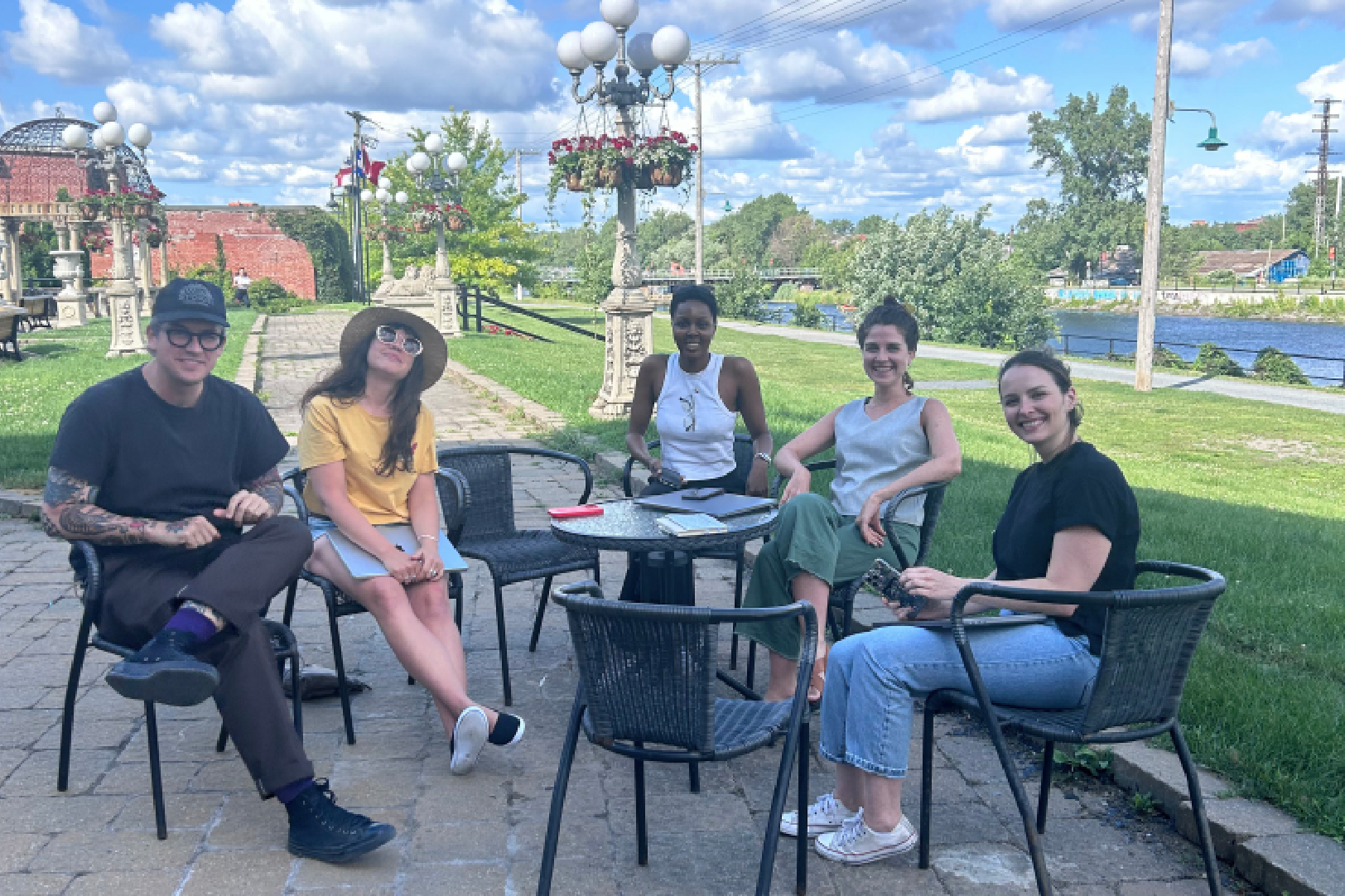
We ran this year’s summit off-site, at a café in the Old Port of Montreal. That alone changed everything. It didn't feel like a meeting that ran long. It felt like we'd actually stepped away for a convention.
Day two was where it really showed. Everyone gave a short lightning talk on something about the craft that had been on their mind lately: a book, a technique, something someone once said that they never quite let go of.
We also ran our own "Steal Like an Artist" workshop. Each of us brought one real object shaping how we think right now and had to explain why it mattered. Then we opened the floor for the conversations we don't normally make time for.
None of it was about output, but it left us with ideas worth carrying back into the work:
“It’s on us to keep bringing diversity, whimsy and joy into the experiences we design. Standards and AI can help guide our decisions, but it’s our responsibility to make sure what we create still feels human.” - Louise
What we brought back into the work
Two main things came out of it:
- We committed to a protected hour each week for personal creative work.
- We started mapping out what our skill sets look like across an AI-improved discovery-phase project.
As Robbie put it:
"It's a reminder to find ways to stay inspired and keep exploring creative thinking. It gives us the energy and perspective we need to keep making impactful, exciting things." - Robbie
Third edition down. I'm already looking forward to the fourth.
%20(1).png)

Did this article start to give you some ideas? We’d love to work with you! Get in touch and let’s discover what we can do together.
Further Reading
.jpg)




-min%20(1).jpg)
-min.jpg)