News/Press
3 Days at NDC London 2026

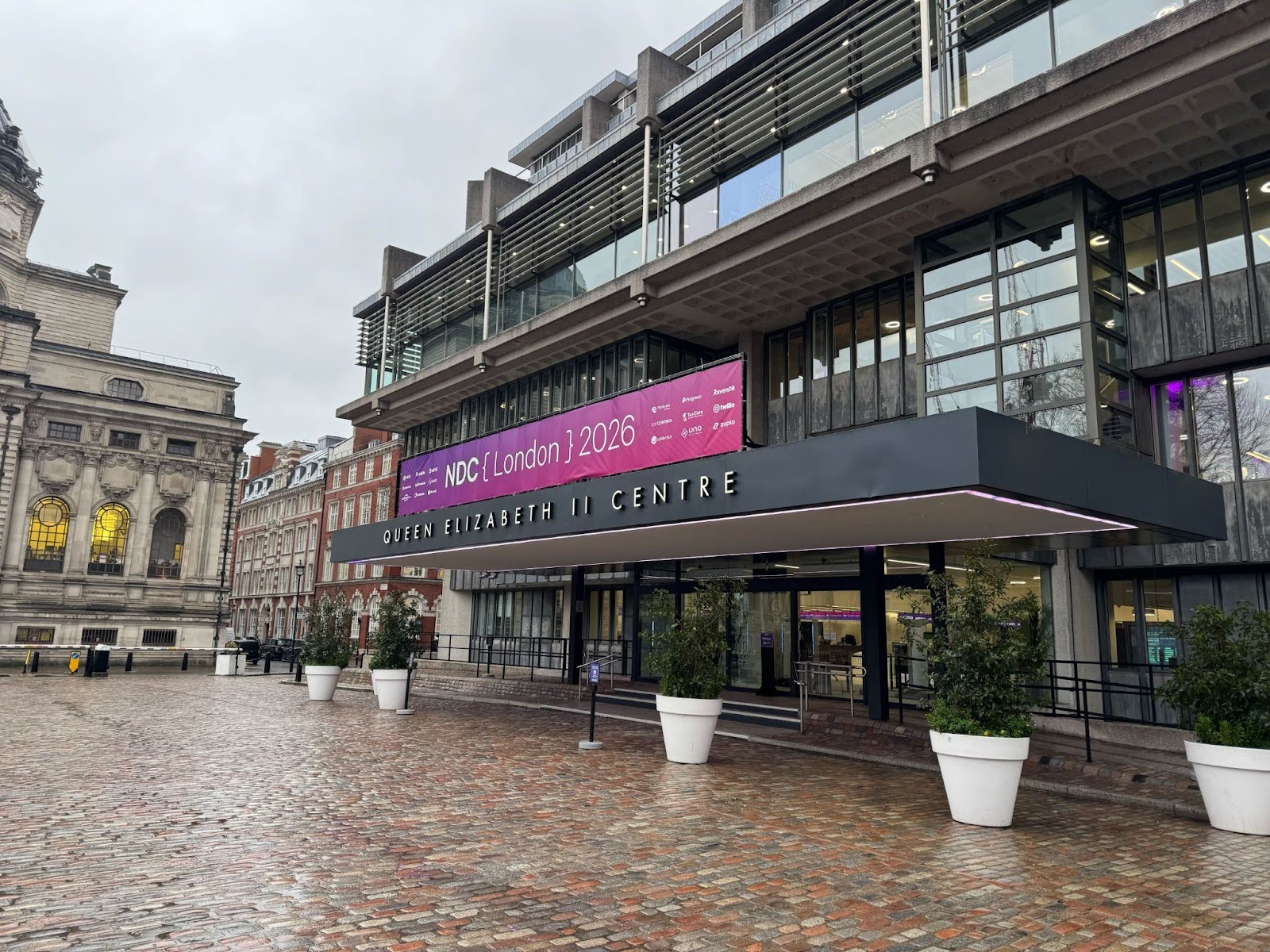
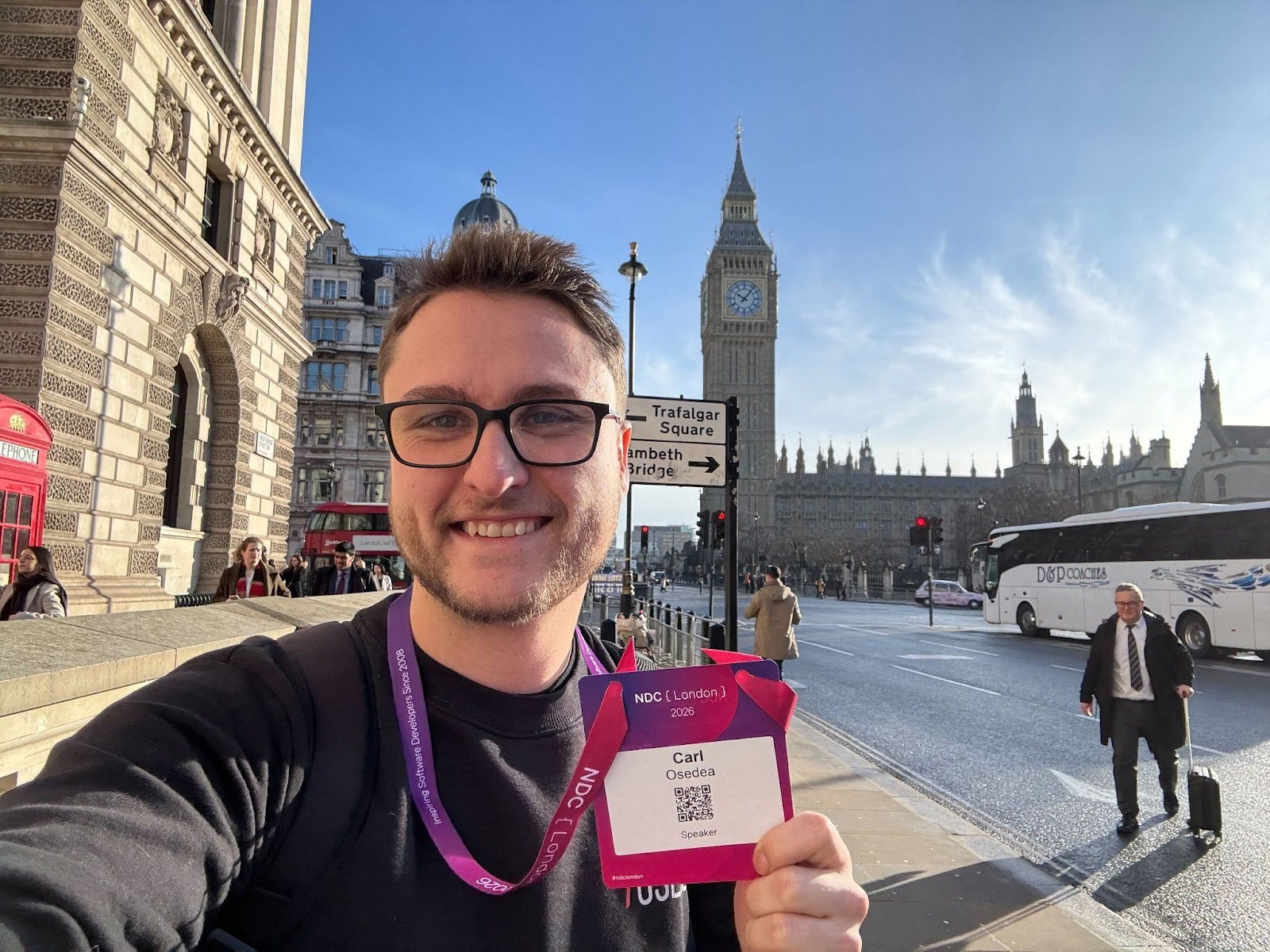
Last week, I had the privilege of not only attending but also speaking at NDC London, one of the premier developer conferences in Europe. I was invited to present on AI agent governance and observability, a topic that's becoming increasingly critical as AI agents move from experimental projects to production systems. Set in the iconic Queen Elizabeth II Centre right next to Big Ben in the heart of Westminster, this three-day event brought together developers, tech leaders, and innovators from across the globe. Over the next few sections, I'll cover some of the highlights from each day and the insights that made this conference truly exceptional.
A Tale of Two Perspectives
One of the most striking observations from my conversations with NDC London attendees was the current divide in the developer community regarding AI adoption. On one side, there were the AI super-adopters, developers integrating AI into every aspect of their workflow, experimenting with agents, and pushing the boundaries of what's possible. On the other, there were those refusing to engage with AI tools altogether, either from skepticism or concern about the implications.
Despite this divide, the conference featured a robust lineup of AI-focused talks that drew substantial crowds, suggesting that curiosity is winning out over resistance.
Day 1: Setting the Tone with Damien Brady
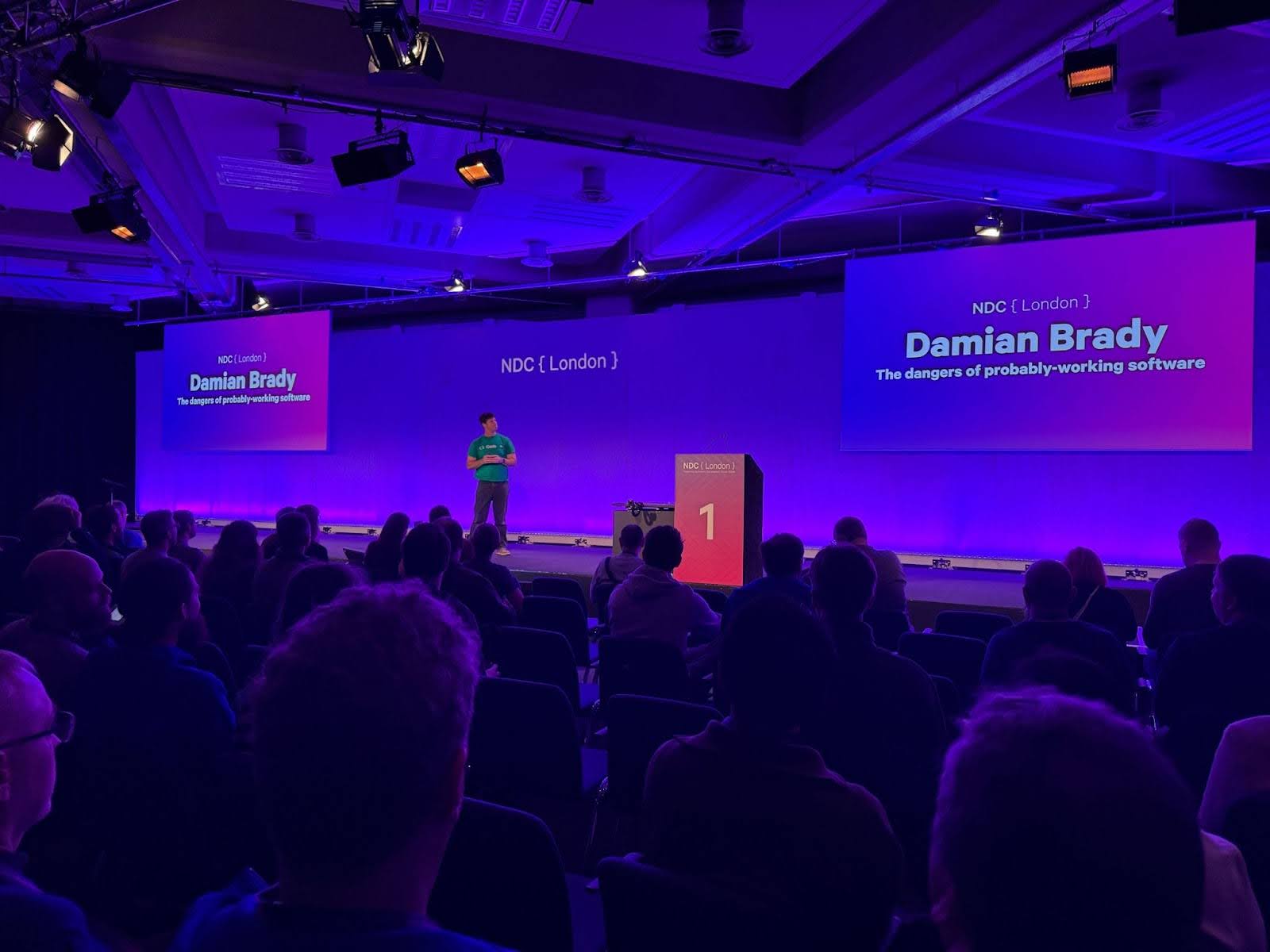
The conference kicked off with a thought-provoking keynote by Damien Brady on "The Dangers of Probably Working Software". His talk connected the dots between how we approach AI tools today and the risks we're inadvertently taking on. Brady emphasized that the same casual attitude we might have toward "probably working" code becomes exponentially more dangerous when applied to AI-powered development. His message was clear: we need to be far more deliberate about the level of risk we're accepting based on the type of application we're developing. It perfectly set the tone for the AI discussions that would follow throughout the conference.
The rest of the day was packed with sessions exploring different facets of AI in software development, and I made it my mission to attend as many as possible.
Deep Diving into AI: The Sessions That Stood Out
Throughout the conference, I attended several compelling AI-focused talks, each offering unique perspectives on where we're headed with this technology:
Supercharged Testing: AI-Powered Workflows with Playwright MCP was a standout. The session demonstrated how the Playwright Model Context Protocol (MCP) opens up incredible capabilities for AI agents. What really excited me was the practical roadmap presented for automated end-to-end testing which provided a concrete plan for implementation that teams could actually execute.
Bringing Stories to Life with AI, Data Streaming, and Generative Agents explored the creative potential of combining multiple AI technologies, while Between the Layers: Interpreting Large Language Models dove into the technical depths of how these models actually work.
But my favorite AI session was AI Agents Need Permission Slips. With the explosive growth of MCPs and AI agents operating with increasing autonomy, it's clear that we need better identity and permission management. However, the speaker acknowledged that simple Role-Based Access Control (RBAC) isn't sufficient for the dynamic nature of AI agents. The talk introduced fascinating concepts around risk scores and context-aware permissions, an interesting take on agent permissions that considers not just who the agent is, but what it's trying to do, in what context, and what the potential impact might be. This nuanced approach to governance is exactly the kind of thinking we need as AI agents become more prevalent in production systems.
My Presentation: AI Agent Governance and Observability
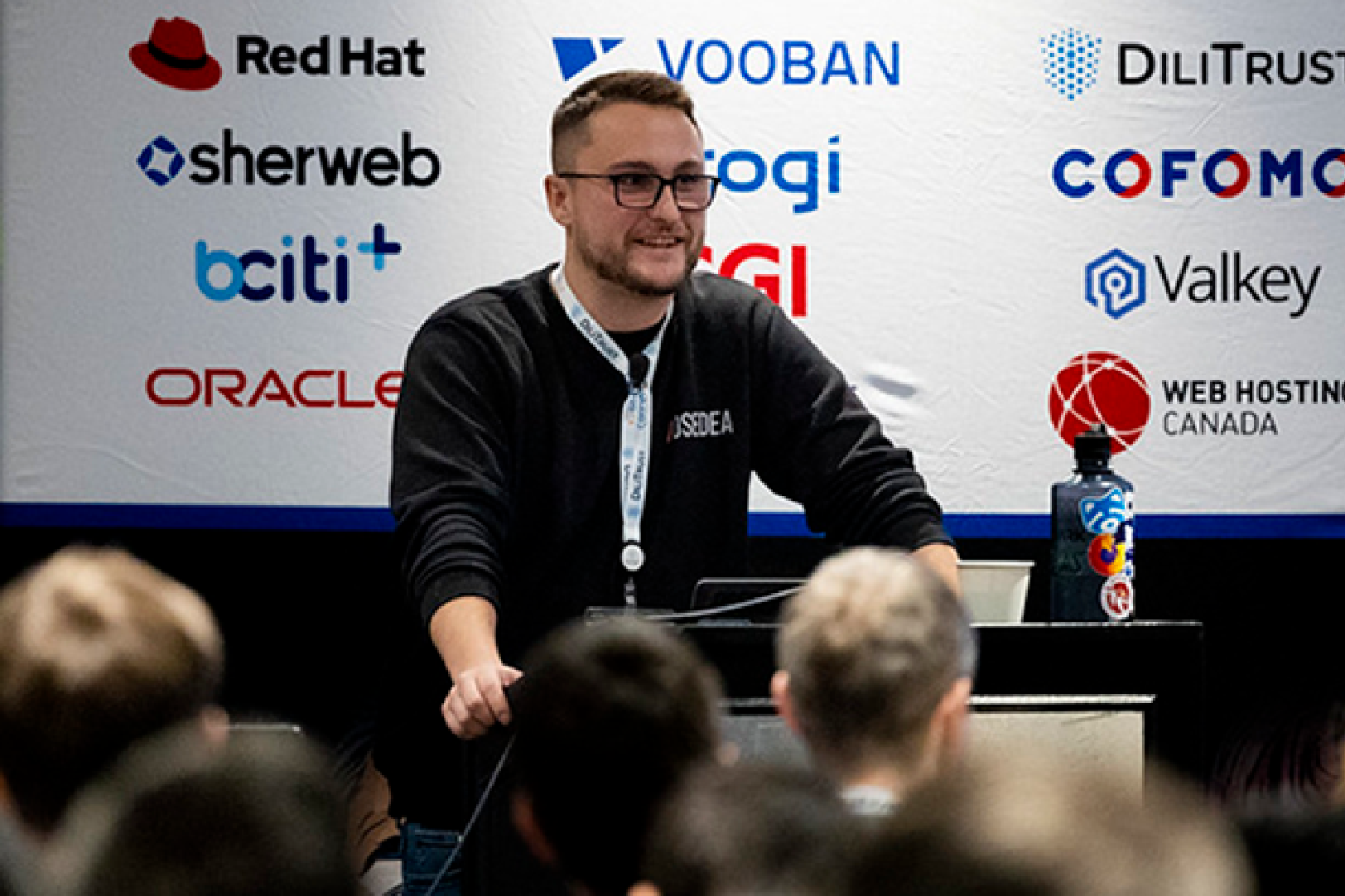
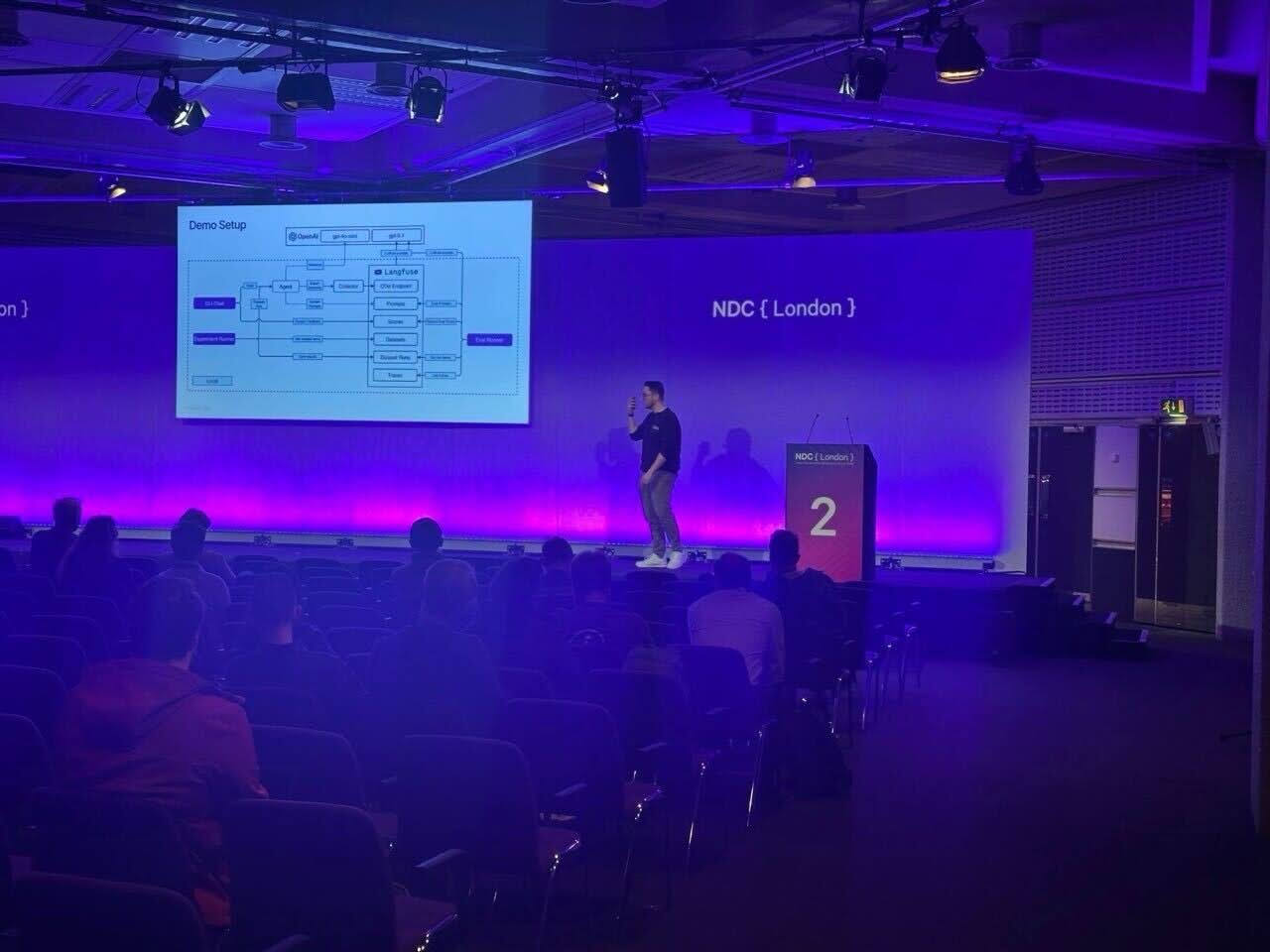
I was honored to be invited to speak at NDC London on the topic of AI agent governance and observability. The session explored the challenge of managing AI agents in production environments. How do we monitor their decisions, ensure they're operating within acceptable parameters, and maintain visibility into increasingly complex autonomous systems? The engagement from the attendees was fantastic, with thoughtful questions that pushed the conversation into areas like audit trails, debugging non-deterministic behavior, and establishing governance frameworks that don't slow down innovation.
Beyond AI: Expanding Horizons
While AI was a major focus for me, NDC London's strength lies in its diversity of content. I made a point to step outside my usual domain and attend talks that challenged my thinking in different ways.
Sessions on treating code as art offered a refreshing perspective on craftsmanship in software development. A talk on quantum computing gave a glimpse into the computational paradigm that might eventually make our current encryption methods obsolete.
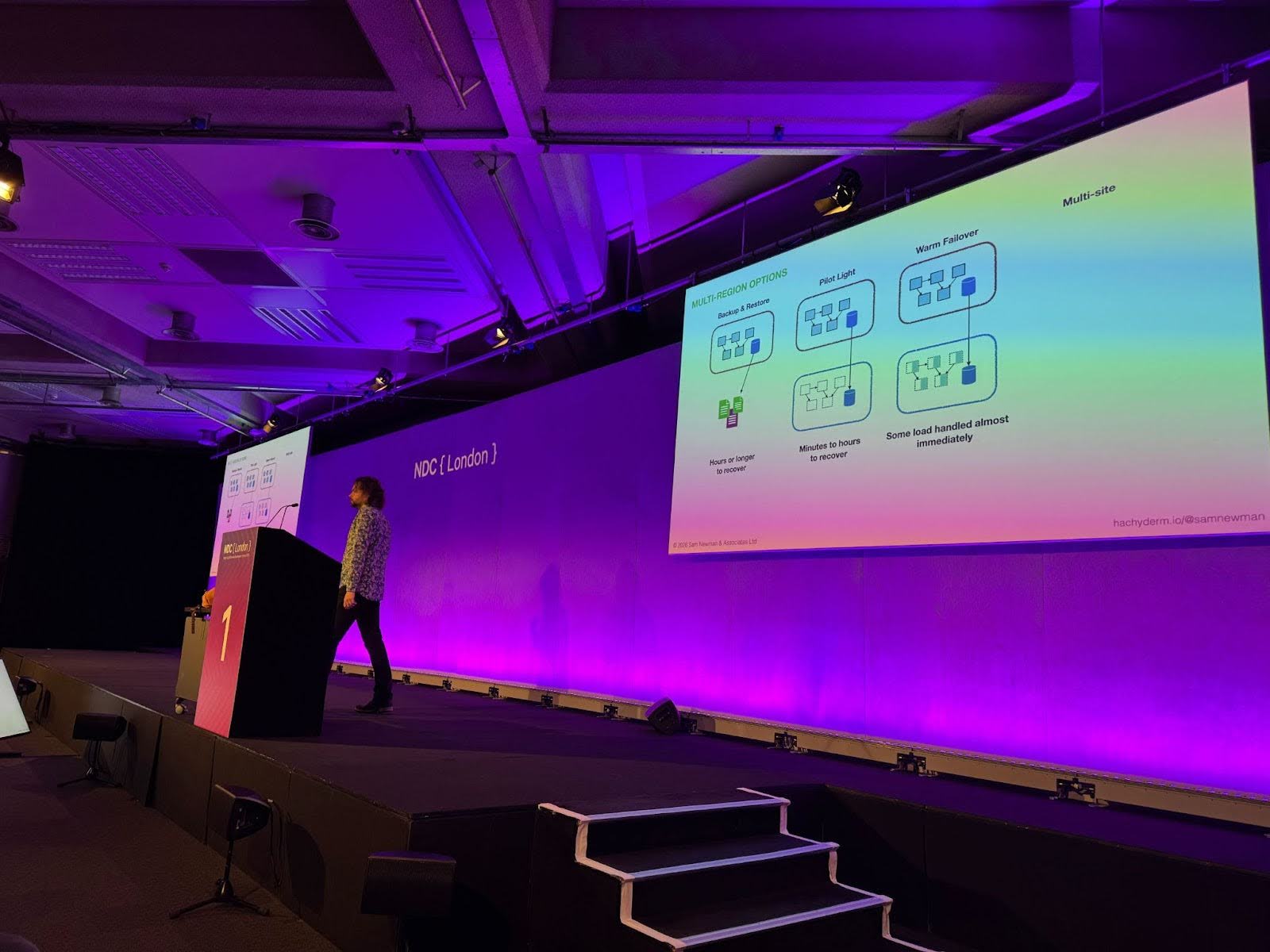
But the talk that left the deepest impression was Progressive Collapse by Sam Newman.
A Masterclass from Sam Newman
For those unfamiliar, Sam Newman is the author of "Building Microservices" and one of the most respected voices in distributed systems architecture. His talk, "Progressive Collapse," was nothing short of a masterclass.
Newman drew fascinating parallels between building collapse and system failures by examining actual NIST (National Institute of Standards and Technology) reports on structural failures. He walked through how buildings that seem stable can experience cascading failures, where the failure of one structural element triggers a chain reaction that brings down the entire structure. The parallels to distributed systems were striking and immediate.
He explored how we can apply lessons from structural engineering to improve our software architectures: the importance of redundancy, the need for graceful degradation, the danger of tight coupling creating single points of failure, and how to design systems that can lose components without complete collapse. By grounding these concepts in real-world disasters with their NIST post-mortems, Newman made abstract architectural principles real and memorable.
The NDC London Experience
Beyond the sessions, NDC London created an environment that fostered connection and conversation. The conference organizers outdid themselves with the culinary offerings, each day featured food representing approximately four different countries, turning lunch and coffee breaks into global culinary tours. From Mediterranean to Asian fusion, the variety kept everyone energized and added an international flair to the experience.
The speakers' night at a traditional London pub was a highlight, offering the perfect setting for informal conversations with presenters and attendees. There's something about a pint in a British pub that makes even the most complex technical discussions feel approachable and collegial.
Walking along the River Thames between the conference venue and the surrounding Westminster area provided moments of reflection and the chance to soak in the true London atmosphere. The combination of cutting-edge technology discussions by day and historic London charm by evening created a well-rounded experience that went beyond just professional development.
Reflections on an Outstanding Event
NDC London reminded me why in-person conferences remain irreplaceable in our increasingly digital world. Yes, we can watch talks online and join virtual discussions, but there's no substitute for the serendipitous hallway conversations, the energy of a live audience reacting to new ideas, and the connections formed over shared meals and experiences.
The conference was an excellent balance between embracing emerging technologies like AI while maintaining focus on fundamental software engineering principles. Whether you're an AI super-adopter or still finding your way with these new tools, NDC London offered valuable perspectives and practical insights.
Big thanks to the NDC organizers for putting together such a well-executed event, and to the Queen Elizabeth II Centre staff for their hospitality. The combination of world-class content, amazing food, historic setting, and genuine London atmosphere made this an unforgettable experience.If you're passionate about software development and curious about where our industry is heading with AI, we'd love to hear from you. Reach out to us!


Did this article start to give you some ideas? We’d love to work with you! Get in touch and let’s discover what we can do together.
-min.jpg)

-min.jpg)


-min.jpg)