AI
What is AI Anomaly Detection? Definition, types, and real-world examples

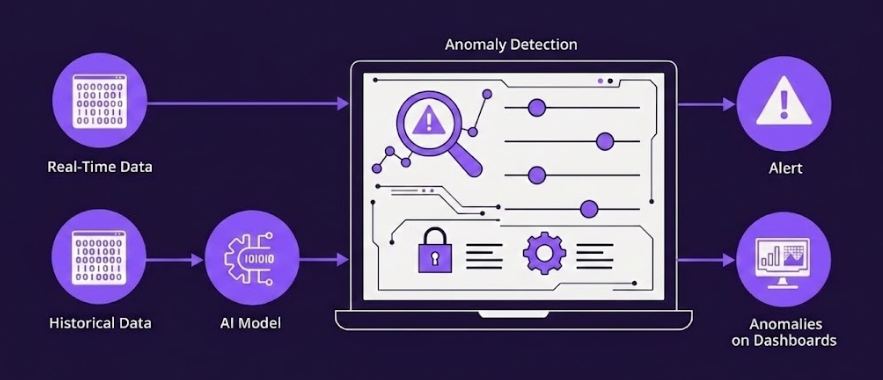
What is Anomaly Detection (AD)?
Anomaly detection is about catching patterns in your data that just don't look right. Instead of having a bunch of rigid rules about what's bad or suspicious, it uses AI and machine learning to actually learn what "normal" looks like by studying your historical data.
Once it's got that baseline down, it can spot when something's off, even the subtle irregularities that traditional methods would probably miss. These anomalies could mean you've got fraud going on, systems failing, security breaches, or technical glitches. But they can also reveal opportunities to improve processes or optimize performance.
The cool part is that AI systems can tear through huge amounts of messy, complex data really fast and with solid accuracy. And they keep getting better over time as they learn from more data and feedback, which means you end up with fewer false alarms and sharper detection.
That's why industries like finance, healthcare, cybersecurity, and IT infrastructure have gotten really into it. It helps them stay ahead of threats that are constantly evolving and catch problems early before they blow up into something major.
Why is Anomaly Detection important?
Here's why paying attention to anomalies matters:
- Catch issues fast: Detecting unusual patterns early lets you address problems while they're still small and manageable.
- Get security alerts: Odd data behavior can warn you about potential cyber attacks or breaches before they cause damage.
- Boost efficiency: Finding what's out of place helps you optimize systems and improve overall performance.
- Minimize impact: Acting quickly on irregularities prevents minor glitches from becoming costly disasters.
AI Anomaly Detection in Different Industries
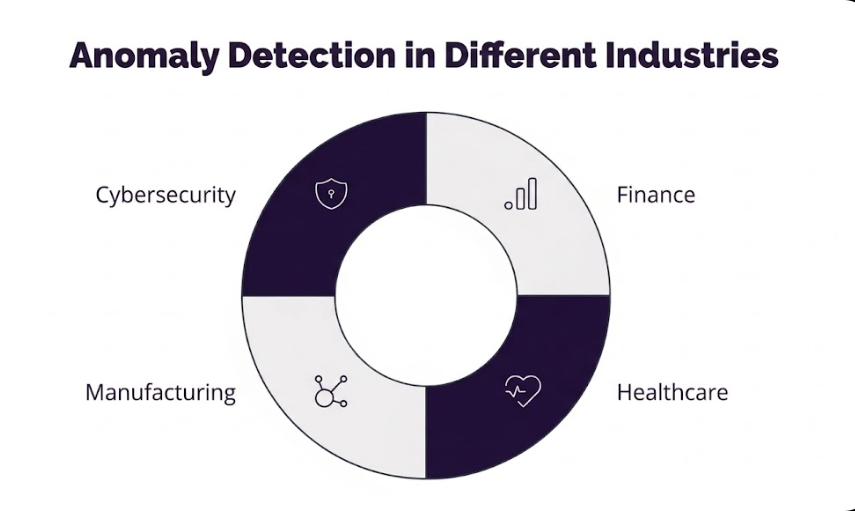
Here's how different sectors put anomaly detection to work:
Cybersecurity and Network Defense
- Identifies unusual traffic patterns that might signal intrusions or malware
- Flags strange user behavior to prevent data breaches and maintain compliance
Finance and Fraud Prevention
- Spots fraudulent transactions as they happen in real time
- Cuts down financial losses and supports regulatory compliance
Healthcare and Patient Monitoring
- Monitors patient vitals continuously for unusual readings
- Enables early detection of diseases or treatment complications
Manufacturing and Predictive Maintenance
- Tracks equipment performance and alerts before breakdowns occur
- Prevents costly downtime and extends machinery lifespan
Quality Control
- Identifies defects in products or packaging through camera footage and sensor analysis
- Detects irregularities in production metrics before faulty products ship
IT Operations and System Management
- Analyzes application logs to identify performance issues
- Reduces alert fatigue by filtering noise and highlighting real problems
Retail and E-commerce
- Prevents fraud by identifying unusual purchasing patterns
- Detects fake reviews, account takeovers, and refund abuse
Energy and Critical Infrastructure
- Identifies irregularities in energy consumption for efficient management
- Predicts maintenance needs before equipment failures impact operations
Types of Anomalies
Getting a handle on different anomaly types is key to building effective detection systems. Each category comes with its own challenges and needs specific analytical approaches to catch them. Here are the three main types:
Point Anomalies
Point anomalies happen when a single data point strays way outside the normal range. They're usually the easiest to spot, but they can still signal serious problems.
- Finance example: A transaction that's unusually large compared to someone's normal spending habits might mean credit card fraud.
- Healthcare example: A sudden jump in a patient's heart rate that falls outside their typical range could indicate a medical emergency.
Detection challenge: These can get hidden in noisy data, so cleaning your dataset and setting accurate thresholds becomes really important.
Contextual Anomalies
Contextual anomalies only stand out when you look at the bigger picture. What's perfectly normal in one situation might be a red flag in another. These show up a lot in time-series and location-based data.
- Energy management example: High electricity usage during the day is expected, but that same spike at 3 a.m. could mean something's wrong with your equipment.
- Retail example: Fewer online orders during slow months makes sense, but that same drop during a major holiday sale is alarming.
Detection challenge: Your models need to factor in context like time, location, or user profiles, not just the raw numbers.
Collective Anomalies
Collective anomalies occur when individual data points look fine on their own, but together they form a suspicious pattern. These are trickier because the problem is in how the data behaves as a group.
- Cybersecurity example: Login attempts from multiple countries within minutes might look normal individually, but together they suggest a coordinated attack.
- Manufacturing example: Small sensor fluctuations that seem harmless alone could collectively signal equipment wearing down.
Detection challenge: You need models that can analyze sequences or clusters of data, like recurrent neural networks or clustering algorithms.
Benefits of Using AI for Anomaly Detection
AI-powered anomaly detection brings major advantages over traditional rule-based systems:
- Higher Accuracy and Precision: AI understands normal behavior deeply and catches subtle patterns that static rules miss.
- Scalability and Real-Time Monitoring: Handles massive datasets without slowing down and flags issues as they happen, not in batches.
- Adaptability and Fewer False Positives: Automatically adjusts to changing patterns and learns to distinguish real threats from harmless variations
- Early Detection and Cost Savings: Catches problems before they escalate, preventing disruptions, fraud, and downtime.
- Better Decision-Making: Provides insights beyond security for smarter, data-driven decisions across operations.
In short: AI-powered AD catches hidden anomalies early, reduces false alarms, and scales effortlessly to massive data streams.
The result: is faster detection, fewer disruptions, and smarter decisions when it matters most.
Role of Human Expertise in AI Anomaly Detection
AI is powerful, but human expertise remains essential for making anomaly detection systems work effectively in the real world.
Domain Knowledge Matters
Domain experts bring a deep understanding of what's actually normal or abnormal in their specific field. They guide the initial setup by helping define parameters, identify relevant features, and set realistic expectations for the AI models.
- Experts know the context that AI might miss
- They help spot potential false positives during setup
- Their insights ensure models are trained on the right data
Interpretation and Validation
When AI flags something suspicious, humans need to validate whether it's a real problem or just a harmless outlier.
- Complex anomalies often require nuanced judgment that AI doesn't have
- Experts can tell the difference between genuine threats and statistical noise
Continuous Improvement
Human feedback is what makes AI models get better over time. Data scientists use expert insights to fine-tune accuracy and reduce false alarms.
- Models evolve based on what humans learn from real-world results
- This iterative process keeps systems adapting to new patterns and threats
Why trust Osedea for AI anomaly detection
AI-powered anomaly detection is reshaping how industries catch threats and stop problems in their tracks. When you combine AI's speed with human expertise, you get systems that actually deliver results.
At Osedea, we have the experts to tackle your anomaly detection challenges. Whether you're solving a specific problem or exploring new possibilities for your business, we're ready to collaborate. We build custom AI, data, and robotics solutions for organizations looking to automate complex processes and uncover insights from their data. Our teams work with companies in manufacturing, healthcare, and technology to design intelligent systems that detect anomalies, improve operational efficiency, and support better decision-making.
Let's build something powerful together.
Stay tuned for Parts 2 and 3, where we'll tackle specific manufacturing needs and show you how anomaly detection transforms operations.


Did this article start to give you some ideas? We’d love to work with you! Get in touch and let’s discover what we can do together.
Further Reading




-min.jpg)


.jpg)
.png)